





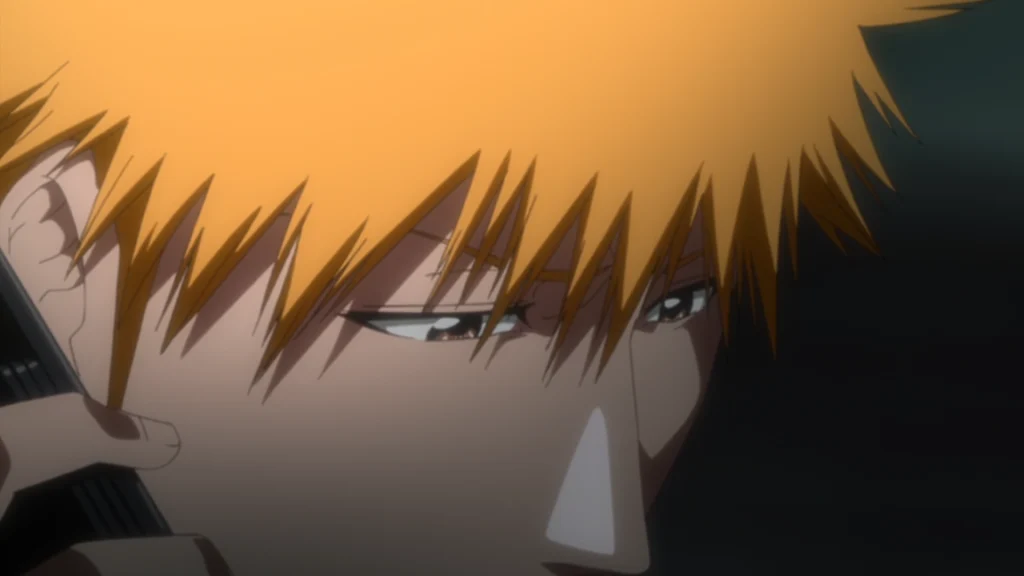
Ichigo Kurosaki: The Reluctant Hero Who Refused to Look Away
Spolier: Bleach (Through the Soul Society Arc)
Bleach was another childhood one for me, and it hit differently than Naruto even though I was watching both around the same time. Something about the art style just felt cooler, more modern, more stylized. The soundtrack had an actual chokehold, like genuinely some of the best music in any shonen, full stop. And the world building, especially once Soul Society opens up and you realize the whole system is corrupt and political and morally messy, that stuff got its hooks in deep. I could go on about it honestly. But this post is about Ichigo, so.
There’s a point early in Bleach where you realize Ichigo Kurosaki might not be built like your standard shonen hero at all. I’m focusing on who he was before things got huge: the stubborn kid who couldn’t ignore someone else’s pain even when he really wanted to.
That’s always been his real strength, way before Soul Society ever came into the picture. When he sees someone hurting and thinks, I can’t just stand here and do nothing. That’s Ichigo’s actual power, not the swords or the forms, but the way he walks toward people even when it’s going to cost him.
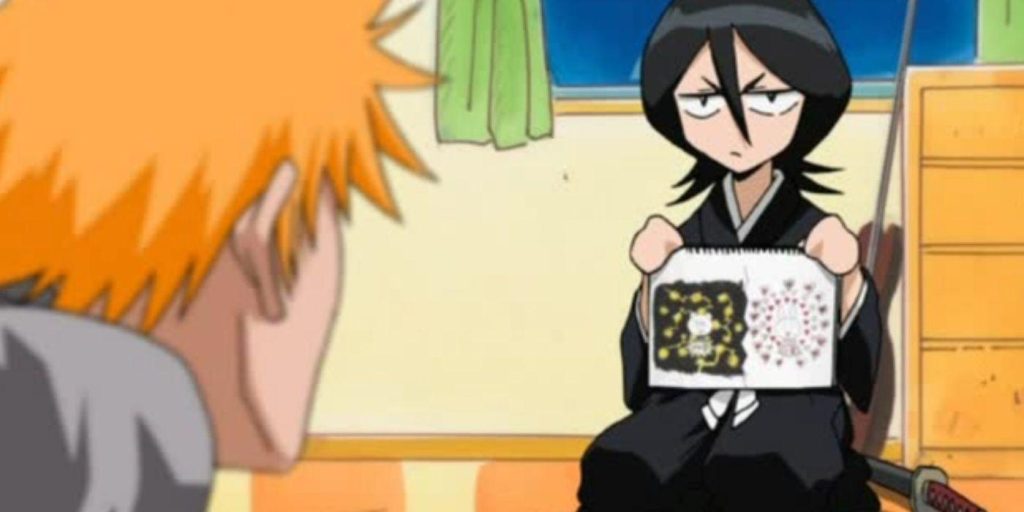
Ichigo starts Bleach already carrying more than any teenager should. He sees ghosts. He sees pain nobody else can. He lives in a world that refuses to explain itself but still expects him to keep up. He doesn’t chase strength for glory, he does it because he genuinely can’t handle the idea of someone getting hurt right in front of him while he does nothing. That instinct gets him into trouble constantly. It’s also what makes him impossible to dismiss.
Even before Rukia loses her powers, Ichigo is already playing protector out of sheer necessity. His world never really gave him the option to be anything else.
Rukia showing up doesn’t give him the urge to protect people, he already had that. What she gives him is direction. When she offers him her power he barely thinks about it, because his sisters are about to die and there’s no version of that where he just watches. The early back and forth between them is honestly one of the best parts of early Bleach.
They argue, push each other, call each other out. Rukia teaches him what responsibility actually looks like. Ichigo reminds her what it means to live with it.
When she gets captured it hits him on a level that goes way deeper than friendship. It hits his sense of fairness, his anger at systems that decide who matters, and that stubborn streak that has never once accepted “that’s just how things are” as a valid answer.

The Urahara training arc is one of Ichigo’s biggest turning points and it doesn’t get talked about enough. It tears him down on every level, physically, mentally, emotionally. The chain-breaking scene is still one of the most unsettling moments in early Bleach.
Watching him stare down the possibility of losing himself completely, fighting to stay human while something else is trying to come through. When the Hollow mask appears for the first time it doesn’t feel like a power up. It’s fear and power and identity all colliding at once.
He walks out of that pit different. Stronger, yeah, but also suddenly aware that the line between protector and monster isn’t nearly as clean as he thought. That awareness follows him into Soul Society and never fully goes away.
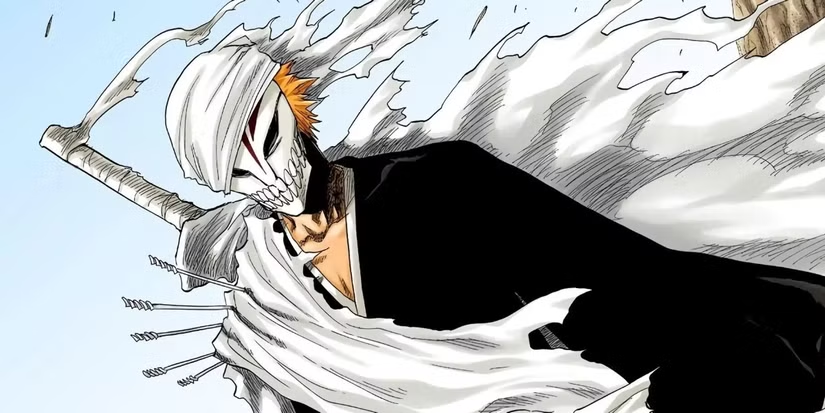
© Tite Kubo / Shueisha / Pierrot
The Soul Society arc is where Ichigo’s growth finally feels personal. He’s not fighting for rank or prestige. He’s fighting because someone who helped him is about to be executed for it, and the whole system responsible for that execution is presenting itself as righteous. Every opponent he faces, Ikkaku, Renji, Kenpachi, reflects something different back at him about who he’s becoming.
The fight with Renji is where the emotional stakes peak. The clash with Kenpachi shows just how reckless he can be when hunger for strength overtakes everything else.
And then there’s Byakuya, which is less a fight than Ichigo calling out the traditions and guilt and blind loyalty that Soul Society has been hiding behind. He forces the whole institution to look at its own hypocrisy, and in doing that he grows more in one arc than most protagonists manage across an entire series.
The corrupt politics of Soul Society, the way the whole thing is built on systems that protect themselves rather than the people they’re supposed to serve, is part of what makes this arc so good.
There’s no clean evil to fight here. Just a broken structure full of people who genuinely believe in it, which is so much harder to push against. Ichigo pushes against it anyway.

© Tite Kubo / Pierrot / Shueisha
Ichigo’s stubbornness usually gets played for laughs. In Soul Society it becomes the thing that defines him. He falls, doubts, breaks. He never stays down.
His identity is constantly shifting throughout all of this: human, substitute Soul Reaper, Hollow-tainted, friend, rival, protector. And he carries all of it with the rough sincerity of someone who still doesn’t fully understand his own strength and probably wouldn’t care even if he did.
That’s what makes him compelling to me. He’s not the chosen one. He’s the one who keeps choosing, every single time, even when the smarter move would probably be to stop.
What Soul Society moment made you realize Ichigo was more than just a Substitute Soul Reaper? I’d love to hear your favorites.
If you like deep-dive character spotlights, you might also enjoy my Edward Elric character analysis.




Pingback: Naruto Character Analysis: Pre-Shippuden Spotlight | Otaku Tavern
Pingback: Tanjiro Kamado Character Analysis: Demon Slayer Spotlight
Pingback: Edward Elric Character Analysis: Fullmetal Spotlight | Otaku Tavern
Pingback: Bleach Captains Ranked by Workplace Behavior