



Edward Elric: Short King, Big Problems, Zero Chill
Spoilers: Fullmetal Alchemist: Brotherhood
FMA Brotherhood is a 10/10 anime that holds up, full stop, and I’ll die on that hill. I came to it as a science nerd who got immediately grabbed by the alchemy power system, specifically equivalent exchange as a governing principle, the way every technique has a real cost built into it, the fact that it’s rooted in actual alchemical history and philosophy.
I went and read about real alchemy because of this show. That’s how hooked I was. And when Brotherhood came out I was genuinely excited because I’d read the manga and wanted to see the adaptation done properly. The 2003 version has its own thing going on and that’s a whole separate post, but Brotherhood being faithful to Arakawa’s vision mattered.
All of that to say: this is a show I care about a lot. And Edward is a huge part of why.
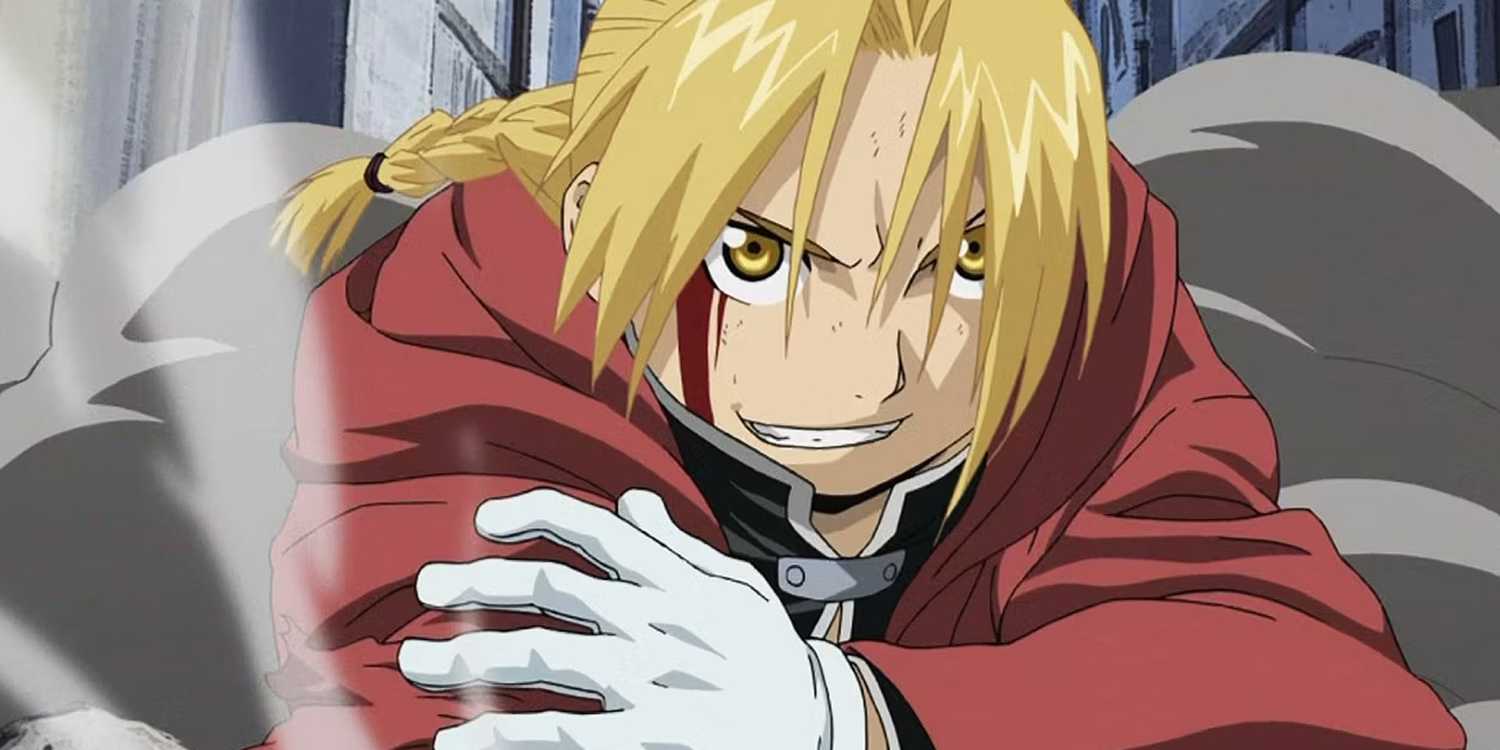
In this Edward Elric character analysis, I’m looking at how Brotherhood builds him not as a prodigy or a symbol, but as someone trying to carry the weight of a mistake that changed his entire life.

Fullmetal Alchemist: Brotherhood © Hiromu Arakawa / Studio Bones.
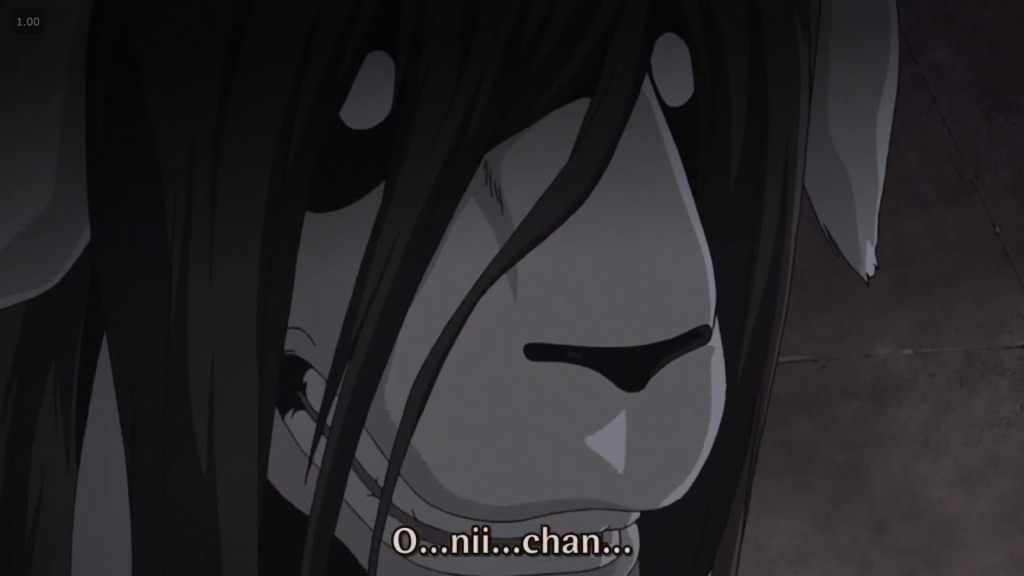
Before the transmutation circle, Edward is just a bright kid with messy hair and a mother who loved him. After it he’s someone who lost almost everything in the span of a few seconds. His leg, his arm, his childhood, and the belief that the world works in fair equations. Just two kids realizing too late that grief took them somewhere they weren’t ready to go.
Brotherhood doesn’t exaggerate that moment. It lets it stay frighteningly quiet. Ed doesn’t have time to understand what he’s seeing before the pain hits. His leg is gone before he can even process it. The thing that takes their mother’s place is wrong in every way a human can be wrong, and by the time he realizes what’s happening to Al it’s already too late.
He reacts on instinct. That’s always who he is. The arm he gives up to pull Al back isn’t a heroic sacrifice, it’s a panicked plea not to be left alone. And in the back of his mind, even through the pain, he knows none of it was worth the price.
Facing the Truth isn’t dramatic either. It shows him everything he gained and everything he lost, like it’s teaching a lesson he should’ve already known. When Ed finally crumples beside Al’s armor he isn’t thinking about alchemy or brilliance or any of the things he once believed in. He’s just a terrified kid staring at what he broke.
Chasing answers because he refuses to accept that what he did to his family is the end of the story.
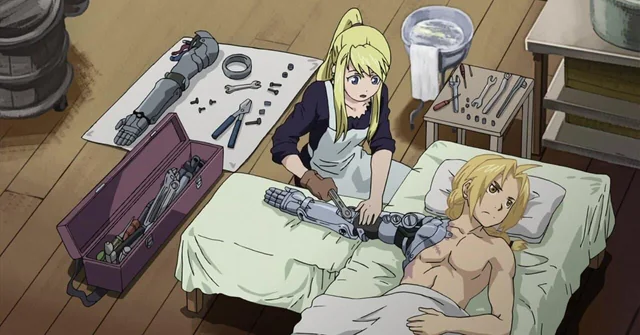
The recovery that follows isn’t a triumphant montage. It’s painful, slow, and humbling in a way the show earns. Ed learns to walk again because Winry and Pinako give him the chance.
That workshop becomes a kind of emotional reset, a place where he’s allowed to just be a kid being held together by people who care. His automail is a reminder of what he lost, what he owes, and why he can’t stop.
And this is where equivalent exchange stops being just a plot mechanic and starts being the whole point. As a concept it’s elegant and brutal at the same time: you can’t get something for nothing, every gain has a corresponding loss built into it.
That’s not just how alchemy works in this world, it’s the lens Edward uses to understand everything that happens to him. He paid a price he didn’t fully understand. Now he’s trying to make the math balance.

Roy Mustang and Maes Hughes end up shaping Edward far more than he ever admits out loud. Neither of them replaces what he’s lost, but they step into the space where guidance should’ve been, one with blunt honesty, the other with warmth Ed pretends to be annoyed by.
Hughes treats him like a kid, which drives him up the wall, but there’s quiet comfort in it. Hughes never expects Ed to be a prodigy or a weapon or a symbol. He asks if he’s eating enough. He worries when he’s hurt. He brags about him. For a boy who’s been carrying responsibility like armor since he was small, that kind of simple affection is genuinely rare.
Mustang pushes him hard and doesn’t coddle or excuse him. Ed rolls his eyes at the lectures and snaps at the teasing, but Brotherhood is clear about what these two men give him: adults who care enough to actually challenge him.
He absorbs their lessons whether he admits it or not, carries their expectations on his shoulders, holds onto their belief in him even when he won’t say so. That’s why the moments when they fall or nearly fall hit him as hard as they do.
Their guidance becomes part of his compass, and for a boy trying to rebuild himself after losing almost everything, that compass matters more than he lets anyone see.
Fullmetal Alchemist: Brotherhood © Hiromu Arakawa / Studio Bones.
There’s one moment in Brotherhood that follows Edward long after the fight ends. The Nina Tucker arc doesn’t let him look away, doesn’t give him a clean resolution, doesn’t offer any version of this where the math works out okay.
It’s the first time the show makes him confront what happens when someone else uses the same knowledge he has, for reasons he can’t justify, and there’s nothing he can do to fix it. No equivalent exchange. No getting it back.
That experience changes how he fights. Not harder in a simple way, but more aware of what he’s actually protecting and what it costs when he fails.

Briggs is the first place where Edward has to function without familiar faces backing him up. He walks into a fortress built on discipline, blunt honesty, and survival, and instead of shrinking under it, he adapts.
Not instantly, he stumbles and argues more than a little, but he listens. He figures out how to navigate a place where nobody cares about his title or his reputation.
Up there in the snow, he’s just another kid proving he can keep up. And what makes that stretch so important is how it forces him to rethink the rule he’s built his entire worldview around: equivalent exchange.
It meant something clean and logical when he was younger. But as he moves through the country, meets people who’ve suffered in ways outside his own experience, and sees how much the military has been hiding, that rule gets harder to hold.
He starts realizing there are things you give that don’t come back. People you lose who don’t get replaced. Sacrifices that don’t balance out no matter how much you try to justify them. It doesn’t break him. It matures him.
By the time he leaves Briggs he’s still stubborn, still emotional, still completely himself, but more aware of the world beyond his own mistakes. He stops following a rule he clung to as a child and starts actively trying to shape his own version of it.

Alchemist: Brotherhood © Hiromu Arakawa / Studio Bones.
For all the chaos Edward survives, what sticks with you most isn’t the alchemy or the fights. It’s how much he grows without ever losing the core of who he is. By the end of Brotherhood he’s not the boy kneeling beside a transmutation circle anymore. He understands that strength isn’t about taking shortcuts or pretending he doesn’t feel things.
Every lesson hits him the hard way. Every victory comes with something he has to carry afterward. And somehow he becomes stronger because of those cracks, not in spite of them.
By the time he reaches the end of his story, Edward stops treating Equivalent Exchange like a mathematical rule and starts understanding it as something closer to a personal philosophy: you give what you can, you protect what matters, and you don’t run from the weight of your own choices. It’s not neat. But it’s honest, and that’s what makes him feel real.
Edward Elric doesn’t save the world because he’s chosen by fate. He learns, slowly and painfully, that doing the right thing is worth more than any alchemical shortcut ever could be. That’s why his story hits so hard, not because he’s perfect, but because he keeps trying to be better than he was yesterday.
And as a science nerd who fell in love with this show for the power system and stayed for everything else, watching him work that out over the course of a full series is genuinely one of the best payoffs in the genre.
And now I’m curious: What Edward moment hit you the hardest in Brotherhood?
Drop your answer I love hearing which scenes stuck with people and why.
If you enjoy deep-dive character spotlights like this, my Naruto and Ichigo breakdowns might hit the same emotional notes for you.
If FMAB got its hooks in you young and never really let go, you already know. The Tavern’s here. ☕
You can find more information about Brotherhood on the official Crunchyroll page.



Pingback: Ichigo Character Analysis: Soul Society Spotlight | Otaku Tavern
Pingback: 7 Anime Mentors Who Lied To Their Students | Tavern Rankings