




Spoilers: Shibuya Arc
God, there’s Jujutsu Kaisen before Shibuya and then there’s everything that comes after. They’re not the same story. The shift isn’t just about body count.
I was maybe five, six months into the series when I hit this arc. Five months. That’s nothing. I hadn’t had time to build up any real armor yet. And I remember just sitting there genuinely traumatized alongside Yuji, heart racing, pearl clutching, thinking what happened to being lost in paradise?? Like where did that show go.
Because it was a complete 180 and nobody warned me.
Before Shibuya the series still gives you air.
There’s danger, real loss, actual stakes, but the world has texture.
You understand how it works.
Characters regroup after missions.
Someone makes a joke that lands.
Gojo exists, which means at some subconscious level you never fully believe things can go all the way wrong. You don’t realize how much that’s been carrying you until Shibuya takes it.
Quick heads up before we dive in. We use affiliate links sometimes. If you grab something through them, you’re helping keep the Tavern running at no extra cost to you.
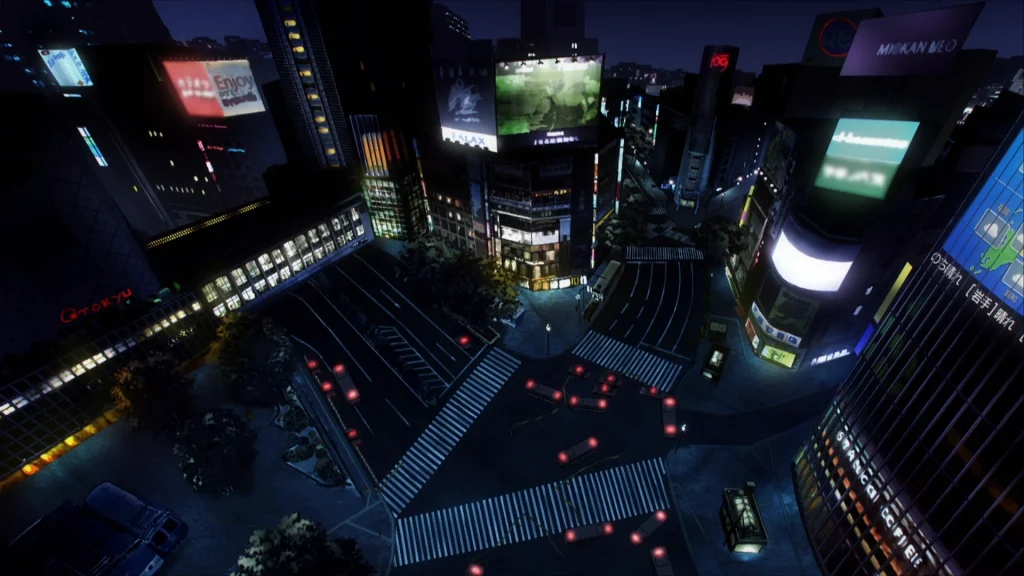
The arc doesn’t build toward collapse. It starts inside one. The barriers go up and something immediately feels off in a way that’s hard to name, like the rules of the story have been quietly swapped out. Streets go hostile. Time gets strange. Characters get separated before they can coordinate, plans fall apart before they can be explained, and nobody on screen, not the heroes, not the villains, not anyone, feels like they have a handle on what’s happening.
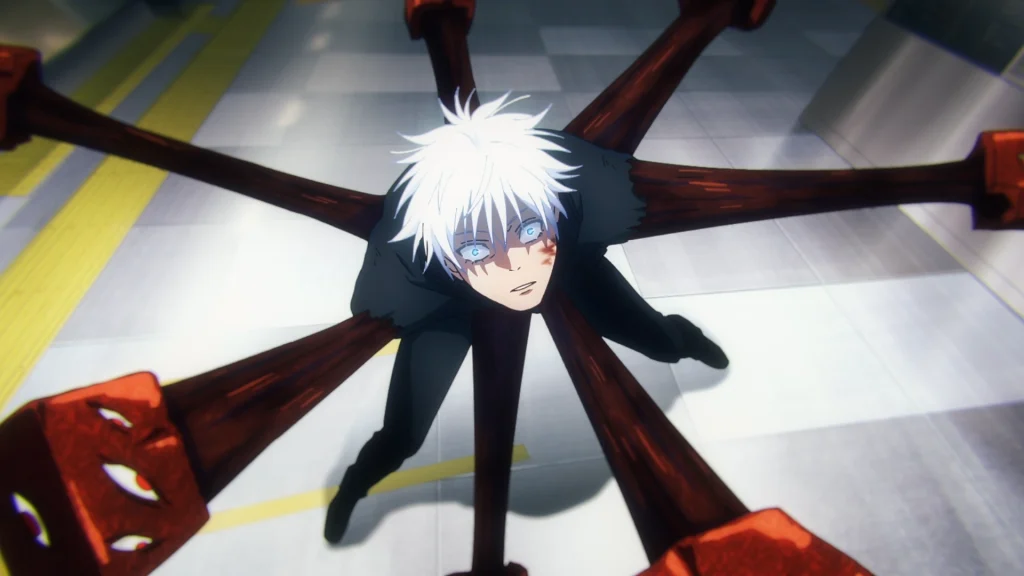
Then Gojo gets sealed. Not beaten in a real fight. Just removed. And I think that’s when my heart actually dropped.
The cruelest part is that he hesitates for a fraction of a second because the face in front of him is Suguru Geto’s face, and his Six Eyes are telling him it isn’t, and his body freezes anyway. Because you don’t erase years of that with cursed energy math. The face is the same. The voice is the same. Some part of him chose memory over instinct for just long enough. He’s not weak. He’s human. That’s specifically why it works.
Up to this point Gojo is the reason nobody’s actually scared yet. Every disaster still comes with a quiet thought in the back of your head that someone will walk in and handle it. Shibuya removes that thought and doesn’t replace it with anything. I remember the exact feeling of realizing nobody was coming to fix this. Every fight after feels heavier because the safety net is gone and there’s nothing replacing it.
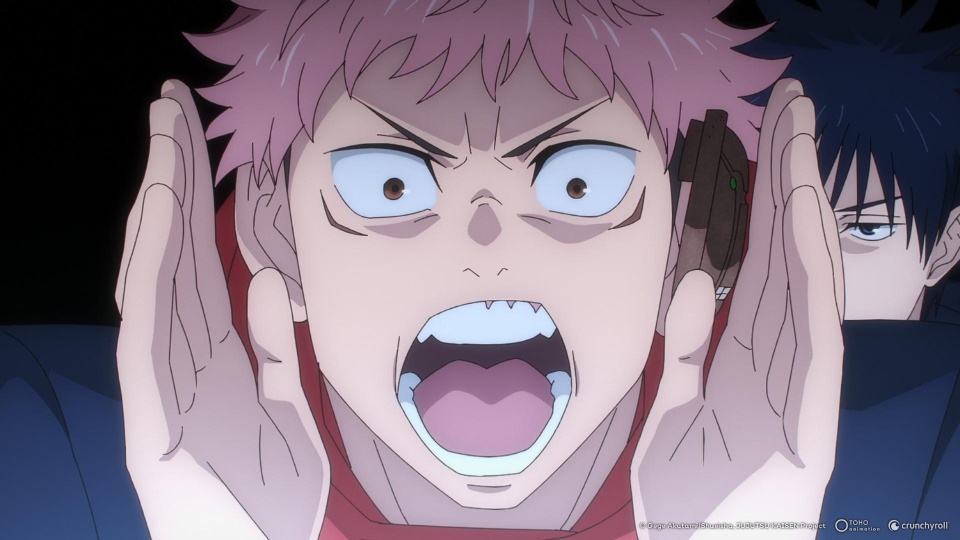
Me trying to find my emotional support adult in a crisis: NANAMIIIIII (echoes hopelessly).
Yuji arrives with no plan and no situational awareness, just a kid who sprinted into a mass casualty event and immediately started yelling “NANAMIIIIII” at the top of his lungs like this is attendance. It’s so stupid and so completely him, and I love him for it, and I resent this arc deeply for what comes right after.
The wild part is that it works. Nanami hears him. Others hear him. For a moment Shibuya is loud instead of hopeless and people know where each other are. It’s not poetic. It’s barely a plan. It’s a breath before the arc starts actively trying to kill everyone.

Then Toji shows up. No setup, no “previously on,” nothing. One second it’s curses and barriers and the next it’s a dead assassin with murder abs strolling through the carnage like he got a late invite and decided to show anyway. He bodies whoever’s in front of him, grins like he’s doing light grocery shopping, and leaves the second the plot remembers he shouldn’t exist anymore. And honestly? Good. Get out. The audacity.
But Sukuna vs. Jogo is where the arc makes its actual statement.
Sukuna takes Yuji’s body and uses it as a toy. Whole city blocks disappear because he’s curious about the upper limit. When Jogo ends up on his knees looking for any scrap of acknowledgment, Sukuna gives him a little head-pat, the kind you give a dog that did something almost impressive, and then ends it. There’s no anger in it. Not even contempt really. Just boredom, which is so much worse. Jogo spent his whole existence chasing recognition from something that barely noticed he was there.
Yuji is in the passenger seat for all of it, watching, counting, unable to do anything.

Megumi doesn’t break dramatically. He goes quiet and runs out of options. He’s been careful his entire life, measuring every decision, every summon, keeping himself controlled, and Haruta takes him apart anyway, cheaply, repeatedly, like it’s funny. No big moment. Just a kid watching everything he built slip away while someone stabs him again.
When there’s nothing left he calls Mahoraga. The shikigami nobody survives. The one thing he swore off. He says the words not because he thinks it’ll work but because letting people die is worse than dying, and that math hasn’t changed.
Sukuna takes over immediately. Watches Mahoraga like it’s a puzzle toy. Adapts in real time. Slashes it apart in a few unhurried swings and casually redraws part of Shibuya’s skyline as a side effect. He keeps Megumi alive after, which somehow makes it worse, because you can tell it’s not mercy.
The kid is going to be useful for something down the line and that’s… not a comforting thought. Yuji spends the whole thing trapped, watching every casual move, every life ended like it barely counts as an action.

Nanami dies tired. Not heroic. Not with anything to show for it. Just worn all the way down, spending his last minutes thinking about bread and a beach in Malaysia he never got to reach.
He tells Yuji “the rest is up to you” the same way you’d hand off a task at the end of a shift, and Yuji has to stand there and receive that, has to watch the one adult who actually showed up clock out and not come back.
I’m still mad about it. Still tired just thinking about it. He deserved the beach.
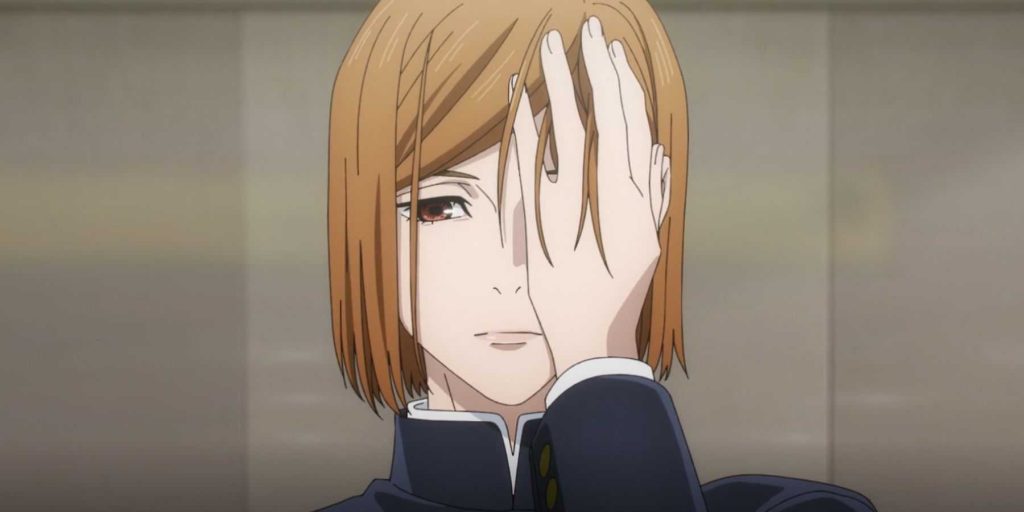
Nobara’s fate gets handled with a specific kind of cruelty: no confirmation, no funeral, only suspension. Arata’s choked “she’s probably…” and then years of silence while the story moves on. Gege freezes her in that panel, half her face gone, and walks away without telling us anything.
Because Nobara wasn’t just the loud one with the hammer. She was the one who refused to make herself smaller for anyone. Rural town, curses, whatever, she’d walk straight at it and call it ugly while she worked. She was the pulse of that trio and Shibuya removes her without even telling us if she’s actually gone.
Every careful mention of her name after that point is another twist of it. We can’t grieve. We can’t be relieved. We end up theorizing and arguing about panels at 3am because closure was apparently not in the budget.
Come back. Eye patch era. Anything. Give us something.
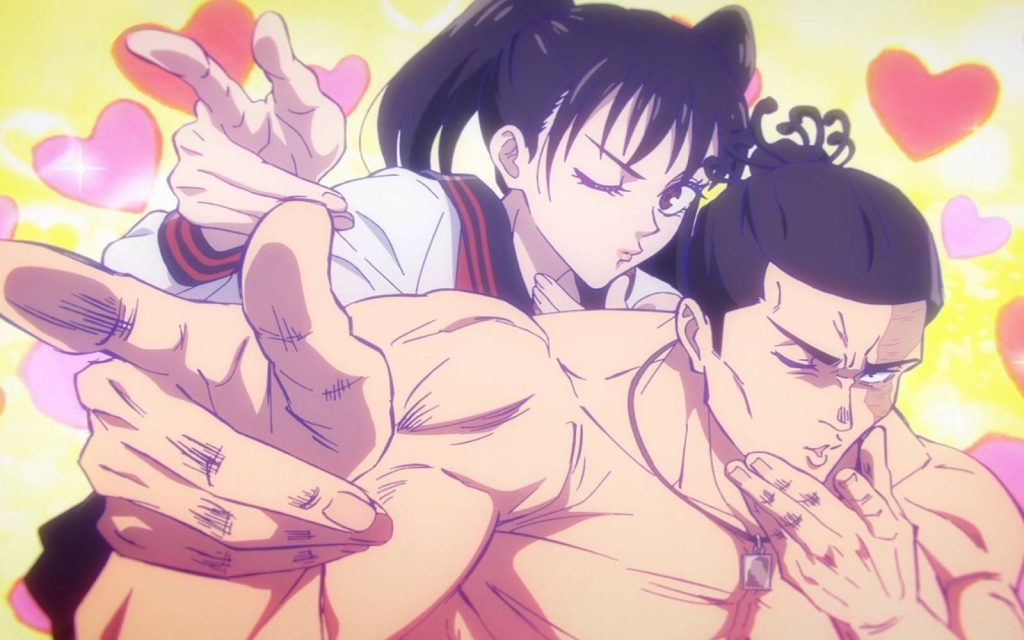
It’s Todo.
And because Shibuya apparently had more to say, Todo shows up in full delusion mode. Boogie Woogie-ing through a war zone. Calling Yuji “brother.” Hallucinating Takada-chan sparkles while standing in rubble and blood and mass trauma.
Mahito can literally see souls and what he’s seeing is Todo’s soul radiating idol concert energy while actively trying to kill him. I hate this arc so much.
It shouldn’t work. It’s completely ridiculous. And it’s exactly what Yuji needed, and honestly what I needed too, because for a few minutes something warm gets into the arc and reminds you that connection still exists even in the middle of all this.
Todo doesn’t fix anything. He shows up, grabs Yuji by the shoulders, and makes the case that still being here counts for something even if you’re not okay.

Shibuya doesn’t end when the barriers come down. It leaks. The adults are gone or compromised. The institutions that were supposed to absorb this kind of damage turned out to be paper. Trust doesn’t heal cleanly and nobody gets time to let it try because the story keeps moving, dragging everyone through the damage with it.
Gojo wasn’t just the strongest sorcerer. He was the last reason anyone had to believe the world was survivable without constantly bracing for the worst. Without him the story stops offering any relief and asks who’s still standing.
The Culling Game is what was waiting on the other side of Shibuya all along, a system built to exploit everything the arc broke open.
Shibuya doesn’t make Jujutsu Kaisen a darker story. It stops letting it pretend otherwise.
And I’m still here with it. The sealing. Nanami’s last words. Sukuna treating an entire neighborhood like a number. I wasn’t okay watching this and honestly I’m still not fully over it. Tell me I’m not the only one carrying this around like a bruise.
Want to feel the exact moment Yuji’s soul files for bankruptcy? Dive into his full character spotlight: from finger-muncher to permanent ghost carrier.
If you’re still sitting with Shibuya, you’re not the only one. The Tavern’s here. ☕
Want to go back through it? Start here: Vol. 10



Pingback: Aoi Todo, Jujutsu Kaisen’s Emotional Support Menace
Pingback: Mahito Character Analysis | Jujutsu Kaisen