





Yuji Itadori Is the Kind of Protagonist You Worry About
Spoilers: Jujutsu Kaisen (Season 1- Shibuya)
Yuji and Denji are kind of spiritual twins to me. Both written by authors who apparently looked at their MCs and decided peace was simply not on the menu. No plot armor, no guarantees, just two kids getting put through it while I sit there genuinely not knowing if they’re going to be okay.
Gege and Fujimoto, y’all okay? Who hurt you? Asking for a friend. Asking for myself actually.
Yuji Itadori starts Jujutsu Kaisen as a kid who genuinely believes being kind will be enough. Not because he’s naive, but because nothing has convinced him otherwise yet. He’s strong, but what actually defines him early on is how easily he cares, not the strength itself.
He helps strangers. He listens. He takes his grandfather’s last words seriously in a way that quietly derails his entire life.
“Help people.”
That’s it. That’s all he gets. And he builds his whole sense of right and wrong around it, like his grandfather handed him a loaded responsibility and said good luck on the way out.

Then Sukuna shows up and turns it into a curse.
He swallowed a finger. Yuji doesn’t become a sorcerer because he wants power or a higher purpose. He becomes one because people start dying and in his head the conclusion lands immediately: this is my fault. No spiraling debate, no heroic refusal. Just responsibility snapping into place like it was always waiting for him.
He accepts the deal the same way he accepts everything else in his life: too fast, without checking the fine print, already halfway convinced that suffering is what he’s supposed to do. Execution after Sukuna? Sure, makes sense. If that’s the price he’ll pay it. There’s no speech about sacrifice. Just a quiet understanding that if people are going to die either way, it might as well be him carrying it.
That instinct never leaves him. What makes Yuji compelling is that he keeps choosing responsibility even when it’s eating him alive in real time, not bravery, just that stubborn refusal to look away.

Junpei is the moment Yuji’s worldview finally cracks.
For the first time he gets what he’s been reaching for since episode one: a normal connection, someone outside the system, someone he can just sit next to and actually talk to. And Mahito takes that away on purpose. Not just by killing Junpei, but by letting Yuji hope first. By making him believe kindness might actually work this time. That part gets me every time.
Yuji’s rage in that moment is hollow, not flashy. Like there’s nothing left to burn except himself. He doesn’t scream for revenge. He screams because he understands all at once that trying to save people means you will fail, often, loudly, in front of everyone, and there’s genuinely nothing you can do about it.

And then Shibuya happens.
Shibuya doesn’t just traumatize Yuji. It rewrites him. Up until then he believes deaths happen around him, tragic but at arm’s length. In Shibuya he’s forced to confront something much worse: deaths happen through him. Sukuna wearing his body. City blocks gone. People murdered who Yuji will never even get to apologize to.
The worst part is that he survives it. He wakes up afterward. He keeps breathing. That’s the punishment, and Gege knew exactly what they were doing with that. Having to walk forward carrying the weight of people he didn’t choose to lose, didn’t consent to losing, but still feels responsible for anyway.
That’s where his real fear lives. The guilt over what he did is manageable. The terror is the knowledge of what his existence makes possible.

He folds inward after Shibuya. Stops asking if something is fair and starts asking if it’s necessary. His fights shift, less about winning and more about ending things quickly before anyone else gets hurt. Even when he’s exhausted. Even when he’s scared. Even when he clearly doesn’t think he deserves to keep going.
And yet he does.
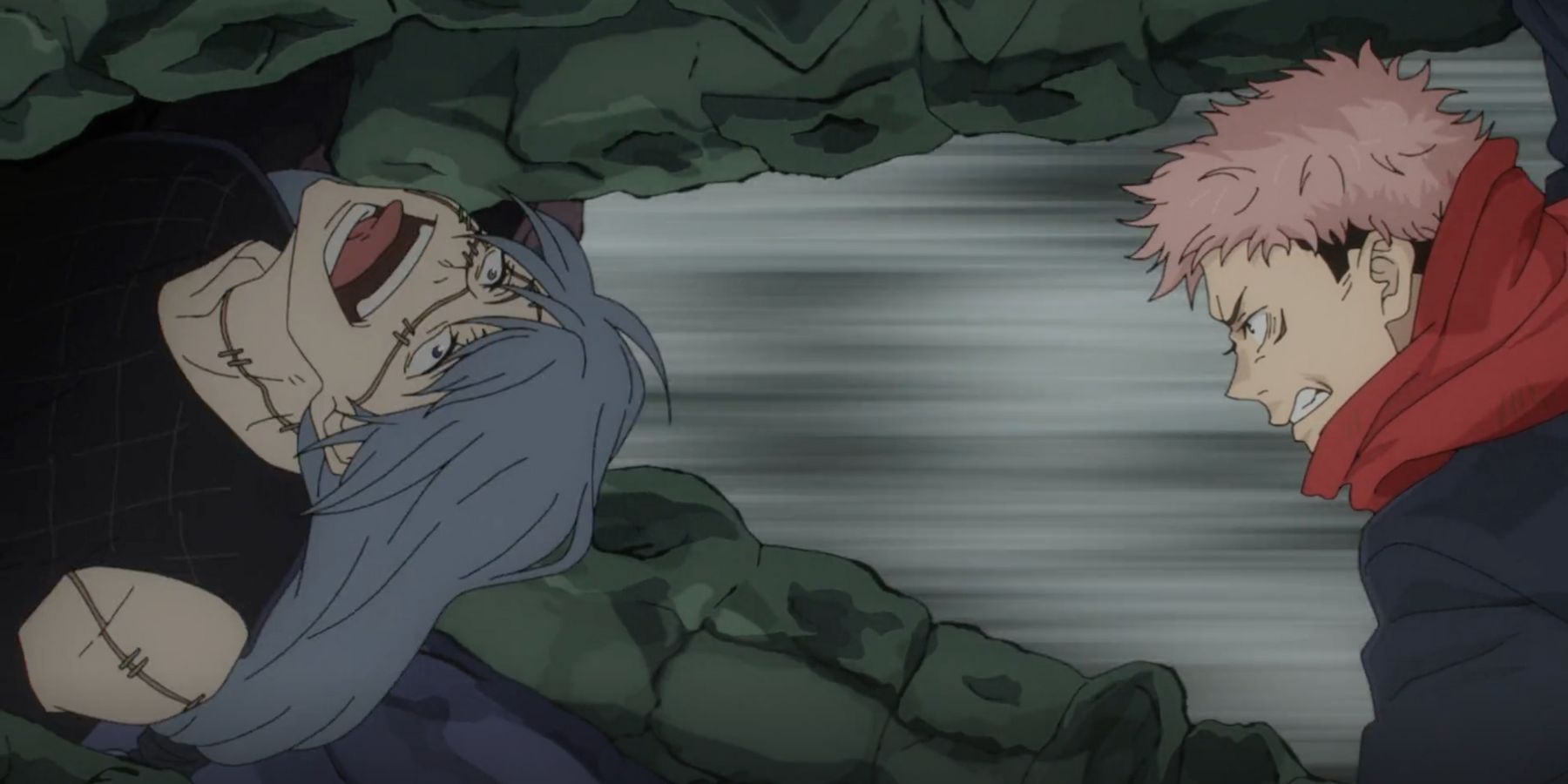
By the time he faces Mahito again he finally understands what Mahito’s been circling since Junpei. They aren’t opposites. They’re parallels. Same instincts, different directions. Yuji kills what threatens people. Mahito kills people because he can. The violence isn’t the dividing line. Yuji feels it, carries it, and still shows up anyway. That’s the line.
Mahito can’t stand that. Because it means Yuji can live with what he is without becoming what Mahito needs him to be.
The story never pretends this is healthy. Yuji’s compassion doesn’t get rewarded with clarity. His self-sacrifice doesn’t fix anything. If anything, Jujutsu Kaisen keeps punishing him for caring, over and over, like it’s waiting to see when he’ll stop.
He doesn’t.
Yuji keeps choosing people. Keeps fighting. Keeps believing that lives have value even when everything around him suggests otherwise. That stubborn humanity is what makes him dangerous to curses like Mahito, not his strength, not his technique. The fact that he refuses to let go of the idea that people matter, even when he doesn’t think he does.
That stubborn humanity is what makes him dangerous to curses like Mahito. Not his strength. Not his technique.
The fact that he refuses to let go of the idea that people matter.
Even when he doesn’t think he does.
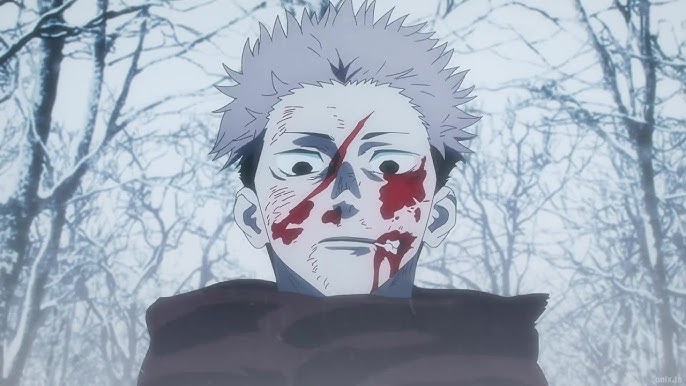
Yuji Itadori isn’t a hero because he saves everyone. He’s a hero because he keeps moving after learning he can’t. He carries guilt, grief, and fear like they’re part of his bones and still shows up anyway.
In a series obsessed with power, Yuji’s real threat is that he never stops being human.
And honestly, that might be the cruelest thing Jujutsu Kaisen ever did to him.
Gege gave this kid the weight of the world and a smile that makes it worse somehow. I worry about Yuji Itadori sometimes. That’s either great writing or a cry for help from the author. Possibly both.
Went arc by arc in my Jujutsu Kaisen arc list, because Yuji’s optimism doesn’t jsut get shattered. It gets chipped. Over. And over. And over.
And if you want to catch up on JJK’s new season it’s currently streaming on Crunchyroll.




Pingback: Why The Shibuya Incident Changes Jujutsu Kaisen Forever
Pingback: Mahito Character Analysis | Jujutsu Kaisen
Pingback: Junpei Jujutsu Kiasen Analysis